

What hurts?
Some possible conditions • Foot Pain – Inside of Foot – Forefoot
-
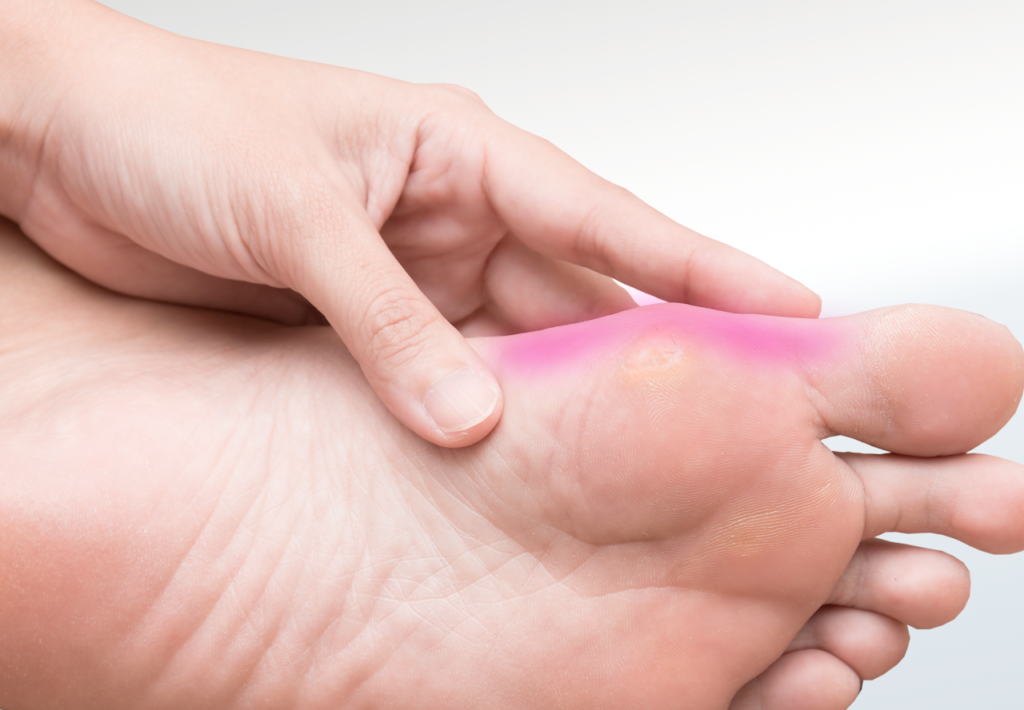 Shoe Friction/Pressure
 -
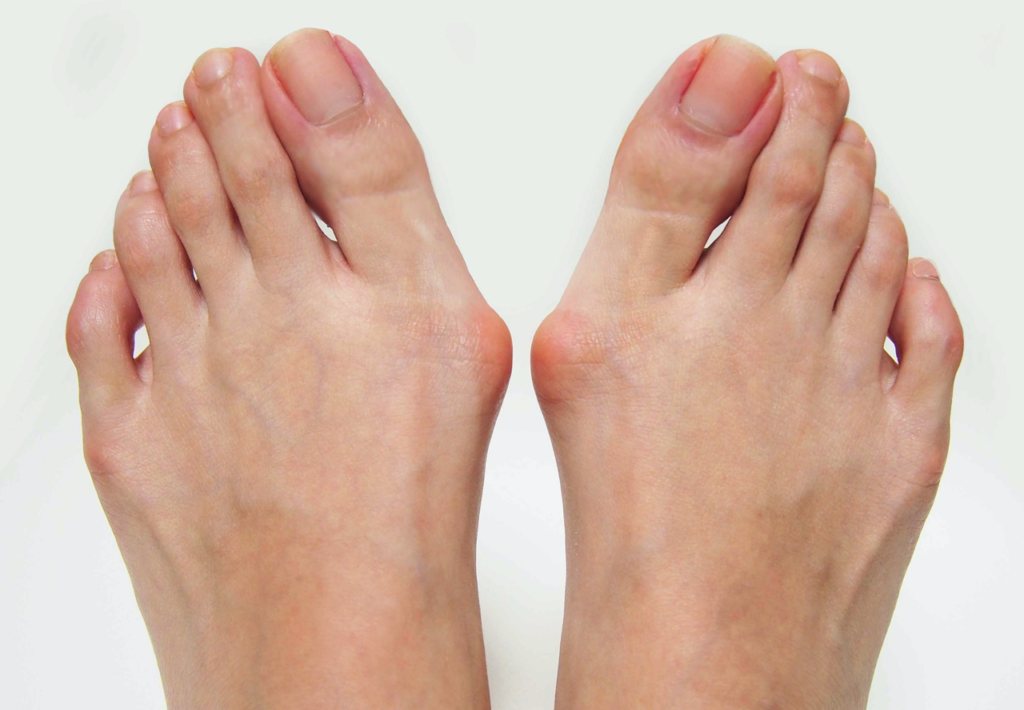 Bunion
 -
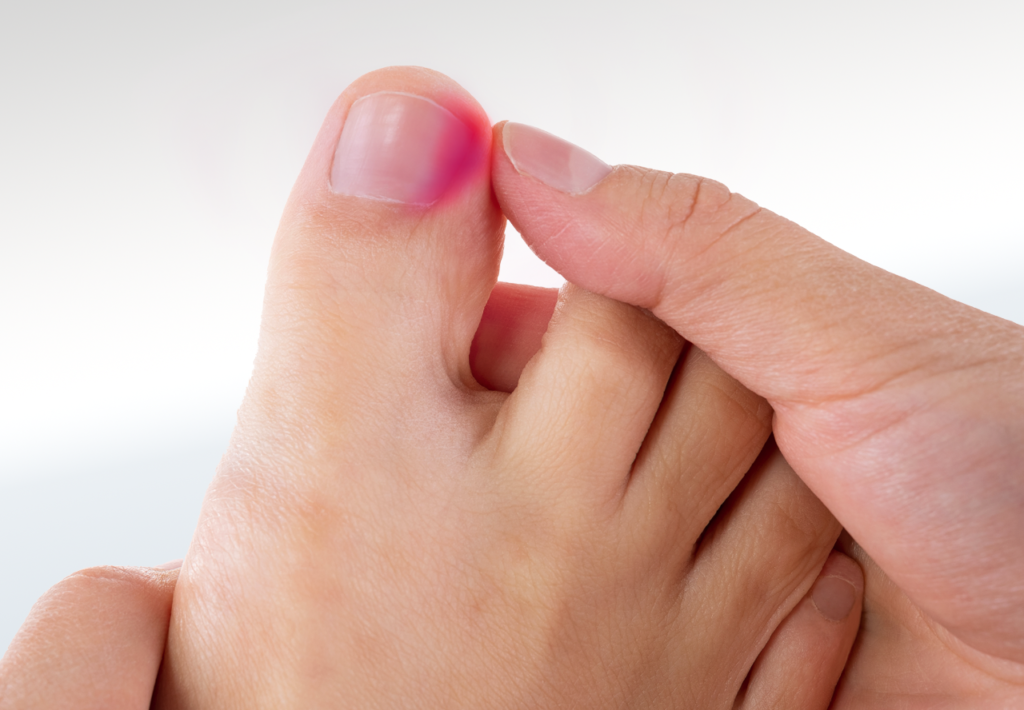 Ingrown Toenail
Some possible conditions • Foot Pain – Inside of Foot – Forefoot
The key to any good (well-made and supportive) shoe is that it fits! No, we are not simply talking about your size being correct. A shoe should be fitting for it’s purpose, your lifestyle, as well as your foot size, shape and structure. Canadian Certified Pedorthists study footwear extensively and are also skilled in making modifications to shoes to better fit someone’s foot.
When a shoe does not fit appropriately, areas of friction and pressure are present and can cause foot pain, redness, callusing, corns and wounds. This can be more pronounced in populations with wide feet, bunions, high insteps, fat pad atrophy, hammer toes, diabetes, and other conditions.
Although a number of conditions and structural/mechanical pathologies can put one at risk for footwear rubbing, on the inside of the foot, it is bunions or wide feet that typically cause the problem. In both cases, ensuring shoes have a wide toebox is crucial. A footcare clinician will not only measure your foot length, but also measure your foot width. Shoes that are too big or too small can both cause issues. Additionally, certain materials are less forgiving than others. For example, “jelly shoes” create redness and pain for most people because the material is stiff and sticks to the foot, causing friction and pressure. Shoe style is important as well, because the shape and depth of the toebox can create problems if not roomy enough. In general, slip on shoes and pointy-toe heels should be avoided.
Where redness on the foot is observed when removing your shoes, it may be time to visit a footcare clinician to understand where the challenge lies. Addressing a bad shoe fit is timely as corns, calluses and wounds will likely appear quickly. Foot pain relief accessories can be found at BioPed to protect tender spots while wearing shoes – for example, silicone toe sleeves to protect hammertoes and bunion sleeves or toe separators to address alignment or bony bump pain. Choosing a shoe that fits is best case scenario, but sometimes shoes need to be modified or stretched to fit well. Ultimately, you should be properly fitted for your footwear by a clinician and not a retail sales associate. They would look at your gait pattern, joint mobility and shoe wear patterns to help you stay comfortable. Certain mechanical or structural conditions might require an orthotic but this is not always the case. If off-the-shelf footwear is not suitable for you, a clinician can cast your feet for a custom-made shoe.
Big toe bunions, also known as hallux abducto valgus, are a common foot deformity most characterized by a painful bony bump on the inside of the foot located near the big toe joint. They usually develop slowly, with increasing pressure to the bony bump causing the big toe to drift toward the lesser toes. The normal position of the bones, tendons, and ligaments begin to deform resulting in the bump appearance.
Pain, tenderness, redness and swelling around the bony prominence of the big toe joint is the most common presentation. Callus can form on the bottom or inside of the big toe joint due to increased pressures from shoe gear and rub. There is often stiffness and restricted motion in the joint, which can lead to difficulty walking.
There are multiple causes of bunions, with heredity being the most common. Over 50% of adult bunion deformities are due to genetics, the remaining are due to poorly fitting shoes, biomechanics and inflammatory conditions, such as rheumatoid arthritis or charcot marie tooth disease. Ill-fitting shoes often have a narrow pointed toe box and increased heel height. A small percentage of big toe bunions appear in kids and are most commonly found in girls aged 10-15.
Many bunions can be treated without surgical intervention. Bunions that cause no pain are monitored for progression only. Following evaluation by a Registered Chiropodist or Canadian Certified Pedorthist, non-surgical treatment is aimed at reducing pain and preventing worsening of the deformity. Changes in shoe gear such as a wider or open toe box, can reduce the compression on the toes. Protective silicone pads can be worn over the bunion area to reduce rub in shoe gear. Toe spacers are often worn to help reduce the big toe from pressing on the lesser toes. Toe alignment splints/braces can be worn to help reduce the ligament and tendon changes in the great toe joint, but do not permanently fix the issue. A professional, such as a BioPed Clinician, can aid with devices such as orthotics to help reduce the pressure to the deformity, slow progession and improve foot alignment. Lastly, non-steroidal anti-inflammatory (NSAID) medications either over-the-counter, such as ibuprofen, or prescription medication can be utilized to reduce the pain and inflammation present with bunions. Bunions that fail to improve after utilizing non-surgical treatment options may require surgical intervention.
Ingrown toenails are painful nails that dig into the skin at the sides of the nail. Skin is the largest organ in the body and is an excellent defense against the elements and microorganisms. When an ingrown toenail pierces or breaks the skin, it can easily become infected with bacteria and extend to the skin around the nail. This is known as a paronychia which can be acute or chronic, depending on how quickly it developed and how long it lasts. In addition to a bacterial infection, a chronic paronychia may also involve a yeast infection as well.
If the toenail punctures the skin, it can quickly lead to inflammation, and pain. If infection occurs, the skin around the nail may appear red, puffy or swollen, have blood or pus seeping out, and feel warm to the touch. The infection will start where the nail actually punctured the skin, but can quickly become worse and spread around the entire nail. Pain and discomfort of ingrown toenails can worsen to the point when wearing shoes is intolerable or bed linens touching the toe causes a restless sleep.
Toenails that are overly curved or hooked at the sides are more likely to dig into the skin, causing pain. Sweaty feet are more susceptible to ingrown toenails because overly moist skin is weak and punctures more easily and creates movement in the shoes displacing soft tissues around the nail. Cutting toenails too short or ripping them off can leave a spike of nail in the corner that will pierce the skin as it grows. Ill-fitting footwear that is too tight, narrow or shallow can press on toes and cause an ingrown toenail. Injury to the toe caused by stubbing or kicking a ball repetitively, can inadvertently drive a sharp corner of the nail into the skin. Bacteria is always around and is not necessarily bad, but a break in the protective skin layer can lead to unexpected infection.
Removing the offending nail is key and is best done by a medical footcare clinician. Options include a simple trim of the border, or a more advanced procedure which can offer permanent results. Ingrown toenail trimming or procedures can be accompanied by local anesthetic to numb the toe if it is extremely tender. If an infection is present, to help ease inflammation and pain, an at-home Epsom salt water soak for 5-10 minutes is helpful as it will draw out pus and infection. An antibacterial cream or ointment applied to the infected site will help control infection-causing bacteria and may even resolve a mild infection altogether. New treatment technology includes toenail bracing. This is where a simply brace is applied to the toenail and trains the nail to grow out without digging in. This is especially great for this people who have recurrent ingrown toenails, are a child or do not want to undergo a permanent procedure. Always make sure shoes fit well and allow toes to move freely and if cutting your nails at home, cut them straight across and not too short.


