

What hurts?
Some possible conditions • Foot Pain – Outside of Foot – Forefoot
-
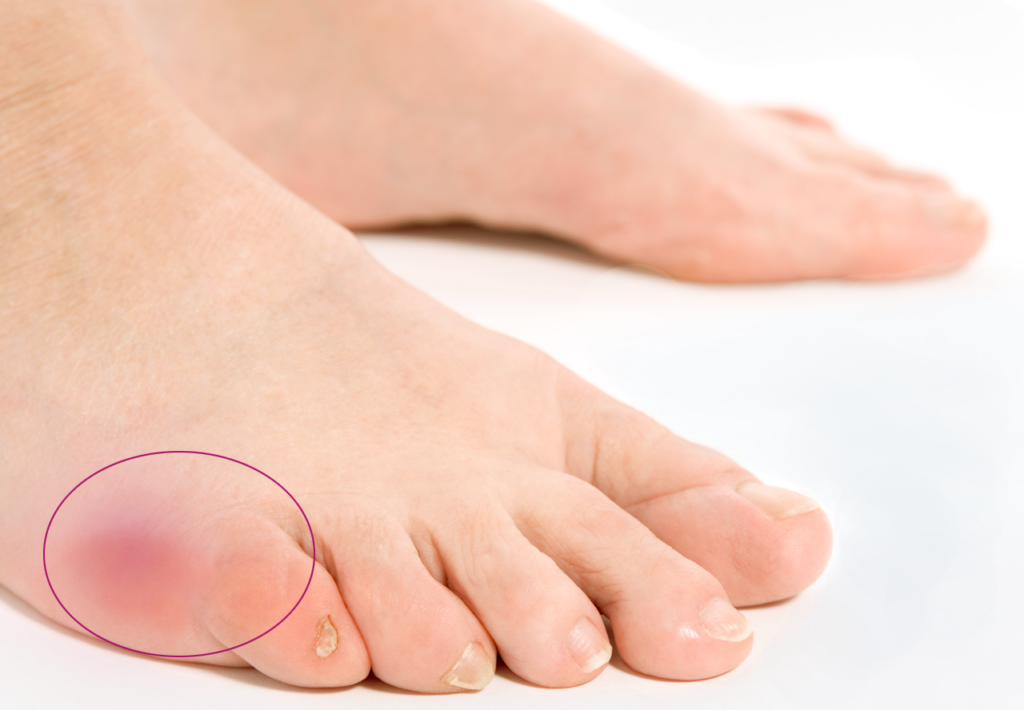 Shoe Friction/Pressure
 -
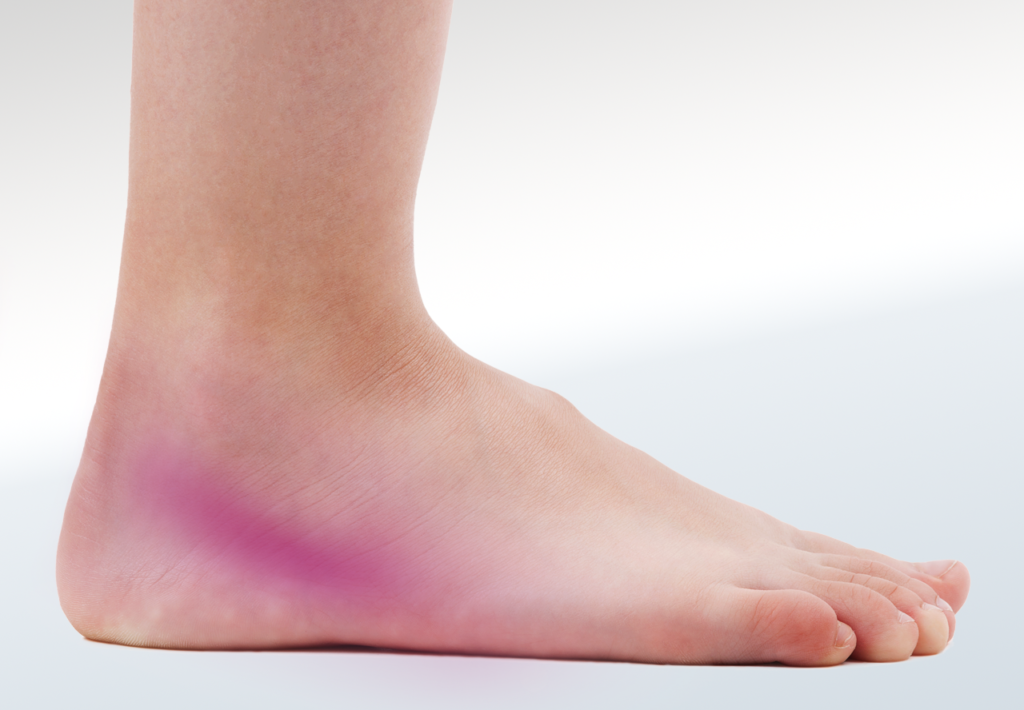 Peroneal Tendinitis
 -
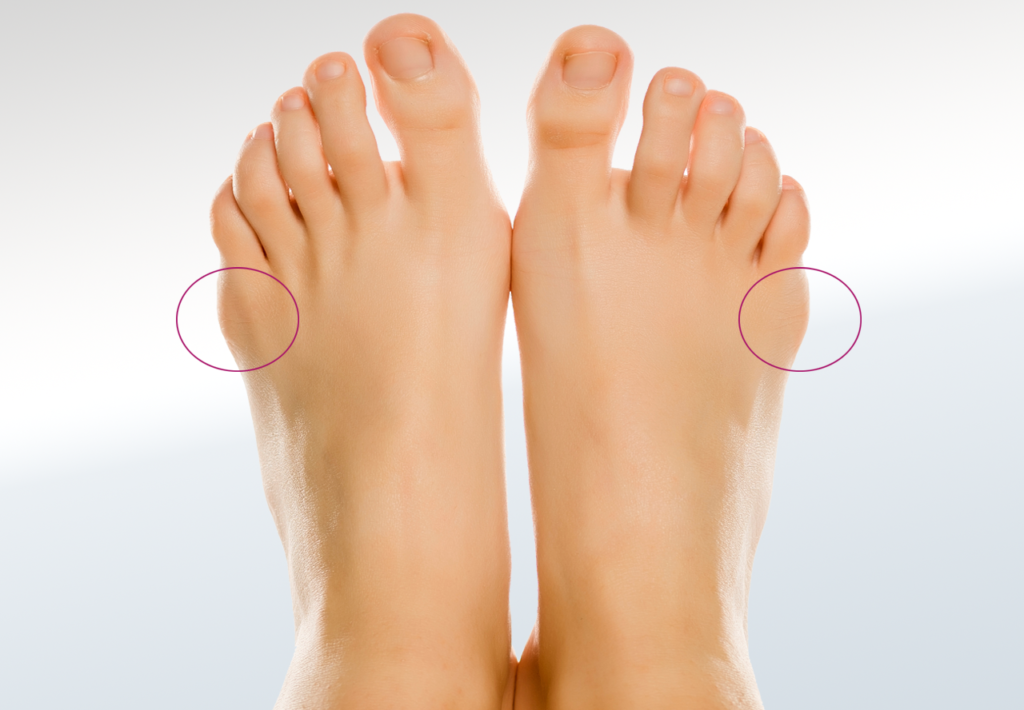 Bunionette
Some possible conditions • Foot Pain – Outside of Foot – Forefoot
The key to any good (well-made and supportive) shoe is that fits! No, we are not simply talking about your size being correct. A shoe should be fitting for it’s purpose, your lifestyle, as well as your foot size, shape and structure. Canadian Certified Pedorthists study footwear extensively and are also skilled in making modifications to shoes to better fit someone’s foot.
When a shoe does not fit appropriately, areas of friction and pressure are present and can cause foot pain, redness, callusing, corns and wounds. This can be more pronounced in populations with wide feet, bunions, high insteps, fat pad atrophy, hammer toes, diabetes, and other conditions.
Although a number of conditions and structural/mechanical pathologies can put one at risk for footwear rubbing, on the outside of the foot, it is bunionettes or wide feet that typically cause the problem. In both cases, ensuring shoes have a wide toebox is crucial. A footcare clinician will not only measure your foot length, but also measure your foot width. Shoes that are too big or too small can both cause issues. Additionally, certain materials are less forgiving than others. For example, “jelly shoes” create redness and pain for most people because the material is stiff and sticks to the foot, causing friction and pressure. Shoe style is important as well, because the shape and depth of the toebox can create problems if not roomy enough. In general, slip on shoes and pointy-toe heels should be avoided.
Where redness on the foot is observed when removing your shoes, it may be time to visit a footcare clinician to understand where the challenge lies. Addressing a bad shoe fit is timely as corns, calluses and wounds will likely appear quickly. Foot pain relief accessories can be found at BioPed to protect tender spots while wearing shoes – for example, silicone toe sleeves to protect hammertoes and bunion sleeves or toe separators to address alignment or bony bump pain. Choosing a shoe that fits is best case scenario, but sometimes shoes need to be modified or stretched to fit well. Ultimately, you should be properly fitted for your footwear by a clinician and not a retail sales associate. They would look at your gait pattern, joint mobility and shoe wear patterns to help you stay comfortable. Certain mechanical or structural conditions might require an orthotic but this is not always the case. If off-the-shelf footwear is not suitable for you, a clinician can cast your feet for a custom-made shoe.
Peroneal tendonitis is an overuse injury causing inflammation and degeneration of the peroneal tendons. It causes pain on the outside of the ankle and can make walking uncomfortable. The peroneal muscles consist of peroneus longus, peroneus brevis and peroneus tertius. All originate in the lower leg and run along the outer side of the leg/ankle to insert into the foot. Tendonitis is an inflammation of tendons. For our purposes, we will be talking mostly about peroneal longus inflammation.
Symptoms of peroneal tendonitis include:
• Pain and swelling on the outside of the ankle, just below the lateral malleolus (outside ankle bone)
• Pain is often worse during activity, but improves with rest
• Tenderness when pressing on the outside of the ankle
• Increased pain with inversion of the ankle (this stretches the peroneus muscles)
Activity or overuse are culprits in inciting inflammation/irritation of the peroneal tendons. Running along slopes, for example at the side of a road causes your foot to roll out more (evert). This increases tension in the peroneal tendon making you more susceptible.
Poor flexibility or not stretching before activity is another risk factor. Tight calf muscles will increase the tension in the peroneal tendon, causing it to rub on the ankle bone more. Overtraining is also a contributory factor, particularly in dancers or basketball players. Lower limb biomechanics can put someone at greater risk for a peroneal injury, such as overpronation or oversupination in gait.
PRICE is the acronym used to manage peroneal tendonitis – protect the tendon (with a splint, or brace), rest it (take time away from activity to heal), ice it to reduce inflammation, compression minimizes swelling, and elevating your foot does as well. People who tend to evert or invert their rearfoot more than others, should seek orthotics to correct this excess motion which will put the peroneals at risk of injury. Supportive shoes combined with stretching and strengthening the tendons are also good practice. Anti-inflammatory medications can help manage acute pain and inflammation as well. Your primary care professional may also want to seek an x-ray or MRI to better understand the damage if these items are not helping. Where a tear in the tendon exists, sometimes surgery is the best option.
A tailor’s bunion, also known as a bunionette, occurs on the outside of the foot near the 5th toe (smallest toe). The deformity is much like a bunion, however its located on the outside of the foot instead. Most bunionette deformities consist of a bony component from a prominent metatarsal head, but many also involve soft tissue swelling or a bursal sac. Just like big toe bunions, they tend to be slow growing and develop over time from shoe wear and activity. The normal position of the 5th toe is often compromised by tight shoes/a narrow toebox, which causes a drift in the pinky toe toward the big toe. The 5th toe joint does not often have pain with motion like a bunion, but more so with pressure while walking.
Painful bursa (small fluid filled) sacs often form on the outside of the bone in order to provide more padding in shoes. These bursa are often painful, swollen and red. Corns and calluses can also form on the outer aspect of the bone due to persistent rub in shoe gear. If pain continues, people often alter their gait in order to reduce pressure to the outside of their foot. This leads to difficulty in walking and compensation that can cause pain in other joints, such as the ankle or knee. Narrow or pointy-toed shoes often causes irritation to the outer skin overlying the bunionette bony prominence. In severe cases the skin can blister and form an underlying ulceration, which can become infected.
Bunionettes are caused by footwear, external pressures (for example, tailors that sat cross-legged on a floor to work on shoes/clothing), and genetics. Footwear that restricts the front part of the foot, or high heels, tend to place more pressure on the area of the bony deformity. More women than men tend to have a bunionette deformity due to shoe characteristics. Lastly, patients with big toe bunion deformities often also experience bunionettes, due to lack of room in shoe toeboxes, and genetic anomalies, such as bowing of the long bones of the foot.
Treatment for a bunionette is almost always non-surgical and can be treated by a professional, such as a Chiropodist or Pedorthist. Treatments include proper footwear, with features such as a wider toe box and instep of the shoe, allowing for decreased pressures to the outside of the foot. There are silicone pads that can be worn to reduce the rub of shoes as well. Oftentimes sandals are preferred for patients to prevent rubbing in closed-in shoes. Semi-rigid orthotics often help with the foot alignment in order to decrease lateral pressures of the foot. Non-steroidal anti-inflammatory medications such as ibuprofen, naproxen or prescription medication may be necessary to reduce the inflammation around the 5th toe joint and reduce the size of any present bursa. Foot pain is not normal and we can help!


