

What hurts?
Some possible conditions • Leg Pain – Lateral
-
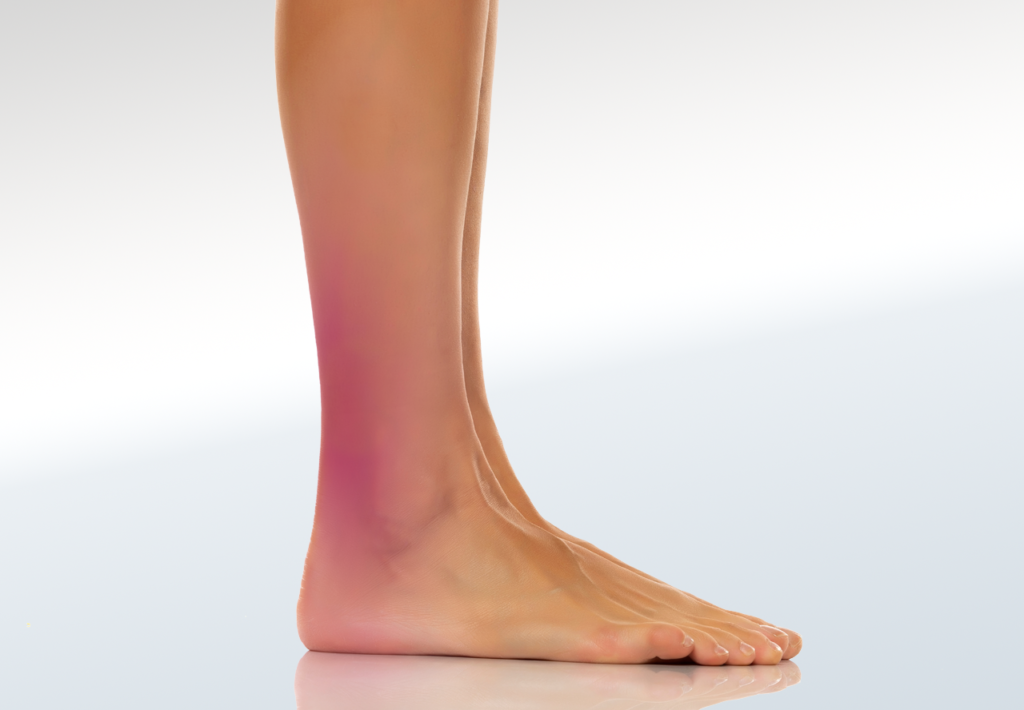 Peroneal Tendinitis
 -
 Swelling
 -
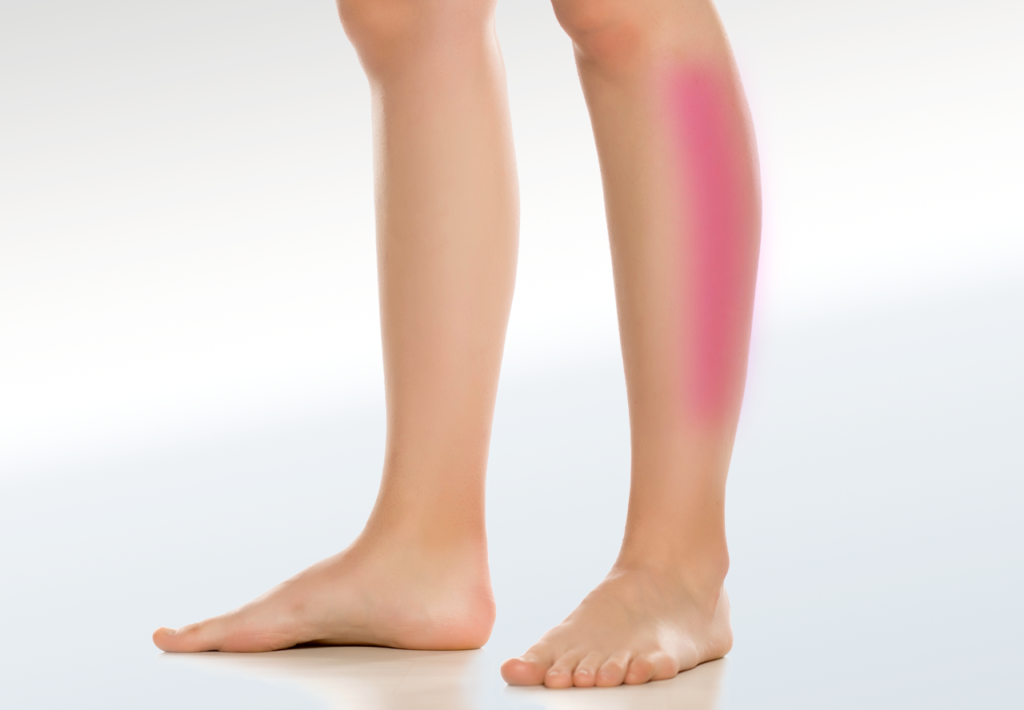 Common Peroneal Nerve Injury
Some possible conditions • Leg Pain – Lateral
Peroneal tendonitis is an overuse injury causing inflammation and degeneration of the peroneal tendons. It causes pain on the outside of the ankle and can make walking uncomfortable. The peroneal muscles consist of peroneus longus, peroneus brevis and peroneus tertius. All originate in the lower leg and run along the outer side of the leg/ankle to insert into the foot. Tendonitis is an inflammation of tendons. For our purposes, we will be talking mostly about peroneal longus inflammation.
Symptoms of peroneal tendonitis include:
• Pain and swelling on the outside of the ankle, just below the lateral malleolus (outside ankle bone)
• Pain is often worse during activity, but improves with rest
• Tenderness when pressing on the outside of the ankle
• Increased pain with inversion of the ankle (this stretches the peroneus muscles)
Activity or overuse are culprits in inciting inflammation/irritation of the peroneal tendons. Running along slopes, for example at the side of a road causes your foot to roll out more (evert). This increases tension in the peroneal tendon making you more susceptible.
Poor flexibility or not stretching before activity is another risk factor. Tight calf muscles will increase the tension in the peroneal tendon, causing it to rub on the ankle bone more. Overtraining is also a contributory factor, particularly in dancers or basketball players. Lower limb biomechanics can put someone at greater risk for a peroneal injury, such as overpronation or oversupination in gait.
PRICE is the acronym used to manage peroneal tendonitis – protect the tendon (with a splint, or brace), rest it (take time away from activity to heal), ice it to reduce inflammation, compression minimizes swelling, and elevating your foot does as well. People who tend to evert or invert their rearfoot more than others, should seek orthotics to correct this excess motion which will put the peroneals at risk of injury. Supportive shoes combined with stretching and strengthening the tendons are also good practice. Anti-inflammatory medications can help manage acute pain and inflammation as well. Your primary care professional may also want to seek an x-ray or MRI to better understand the damage if these items are not helping. Where a tear in the tendon exists, sometimes surgery is the best option.
Chronic (long standing) leg swelling caused by the retention of fluid in leg tissues is also known as peripheral edema. It can be caused by a problem with the venous circulation system, the lymphatic system or the kidneys. Any sudden onset leg swelling with or without injury is reason to seek immediate medical attention. This could be an infection, fractured bone, or blood clot.
Most often people with chronic leg swelling complain of feeling a heaviness in their swollen leg(s) and an achiness or sometimes, pain. It can make walking distances or activity uncomfortable or unachievable. There may some skin changes to your leg that might include skin discoloration, wound formation +/- drainage.
Medicines and pregnancy can cause leg swelling. It also can be the result of a disease, such as congestive heart failure, kidney disease, venous insufficiency, blood clot or cirrhosis of the liver. A primary care professional or vascular specialist can offer more details on what is causing your swelling.
Mild swelling can go away on its own. Wearing compression garments and raising the affected leg higher than the heart when lying down helps. Graduated compression socks and medicines that help the body get rid of too much fluid can treat worse forms of edema. A primary care provider can decide about the need for these water pills. Compression socks work by pushing stagnant fluid in the legs back up to the heart by leveraging your calf muscle pump. Over time, this improves any achiness, fatigue, discomfort, and reduces possible damage to leg skin. Treating the cause of the swelling is often the focus over time. If edema is a result of medicines, for example, a care provider might change the dose or look for another medicine that doesn't cause edema.
Common peroneal nerve dysfunction is due to damage to the peroneal nerve leading to loss of movement or sensation in the foot and leg. Mild peroneal nerve injuries can cause numbness, tingling, pain and weakness. More severe injuries can be characterized by a foot drop, a way of walking that results from being unable to bend or flex the foot upward at the ankle.
The peroneal nerve is a branch of the sciatic nerve. It supplies movement and sensation to the lower leg, foot and toes. Common peroneal nerve dysfunction is a type of peripheral neuropathy (nerve damage outside the brain or spinal cord). This condition can affect people of any age and cause numbness, tingling, burning of the leg. It can also cause drop foot where toes drag while walking.
Common causes of damage to the peroneal nerve include the following: - Trauma or injury to the knee, or fracture of the fibula (a bone of the lower leg) - Use of a tight plaster cast (or other long-term constriction) of the lower leg - Crossing the legs or wearing high boots often - Pressure to the knee during deep sleep or coma - Injury during knee surgery Individuals who are very thin or who have certain autoimmune conditions, such as polyarteritis nodosa, are at an increased risk. Also, for those with nerve damage, such as from diabetes, we may need to call the PCP’s office.
Treatment aims to improve mobility and independence. Any illness or other cause of the neuropathy should be treated. Padding the knee may prevent further injury by crossing the legs, while also serving as a reminder to not cross your legs. And finally, there are various excellent ankle braces available for individuals with drop foot, to help them stay steady and not fall. It is recommended that you seek professional skin and nail care if you have any type of lower limb neuropathy.


